The former Blue Groove product entry numbered 29840 was linked as the Heat & Press Air Scoop in Big Squid RC’s original review. It was a body-forming accessory, not an electric fan. This article identifies that historical subject and explains how to evaluate a cooling modification without confusing a promising shape with a measured result.
What the review actually documents
Big Squid describes a two-part forming tool used with heat to shape an intake in a polycarbonate body, with a protective gel applied around the work area. The reviewer reports practice attempts and difficulty controlling deformation. The article is evidence of the kit and that reviewer’s experience; it is not a complete surviving instruction sheet or a controlled thermal comparison. Read the original Heat & Press Air Scoop review.
The present journal does not sell this kit, supply replacement gel or certify an old tool’s condition. We have not recovered a complete manufacturer procedure or established the composition of the supplied gel. Do not treat a brief historical description as instructions for heating an unknown shell.
Separate the appearance goal from the cooling goal
There are two different projects here. One changes how a body looks. The other attempts to alter operating temperatures. You may want both, but each needs its own acceptance condition. A neatly formed intake can satisfy the first while leaving the second unanswered.
Write the cooling problem before modifying the body. Which component is too warm, according to which manufacturer’s limit and which measurement? Under what surface, gearing, speed and run duration does the problem occur? If you cannot answer those questions, a scoop is a guess attached to a car.
Inspect the existing system first. A blocked fan, debris around a component, an unsupported gear combination or a poor wire route deserves investigation on its own. Changing the shell before identifying the fault can hide a maintenance problem without resolving it.
Plan the comparison before changing the shell
Use the same component-temperature measurement method, measurement location and stopping interval for the baseline and the changed arrangement. Record ambient conditions and the driving task. A reading taken immediately after stopping cannot be compared casually with one taken after a long walk back to the bench.
Keep the gearing, tyres, electronic settings and intended run duration fixed where practical. If the weather or surface changes, record that limitation. Do not call a lower reading proof of the scoop’s effect when the second run also involved less load or more waiting.
Observe the system as installed with the body fitted. Check that an intake or any supporting part clears wiring, suspension and the rotating drivetrain through the required movement. A body modification that introduces interference fails the workshop check regardless of its thermal result.
Use supported body options where possible
Before attempting permanent work, look for the body manufacturer’s supported vent, trimming or accessory options. Use the instructions for the actual material and product. A technique shown on one shell does not establish that a different shell, paint or wrap will tolerate the same process.
If a historical heat-forming kit lacks its procedure or material information, keep it as an identified accessory until those gaps are resolved. Avoid improvising a temperature or substitute chemical from a photograph. The original review itself records the possibility of unwanted deformation; its successful finished example does not remove that uncertainty from another installation.
Keep the conclusion small enough to defend
A useful entry reads: component, baseline arrangement, changed arrangement, measurement method, conditions and result. If the difference is inconsistent, label it inconclusive and repeat under comparable conditions. If the modification only changes appearance, say so.
For a power-system problem, continue with the brushless fit and gearing worksheet. For recording the comparison, use the run notebook. Neither a historical product name nor an attractive new opening replaces those basic checks.
Older air-scoop links and the replacement illustration
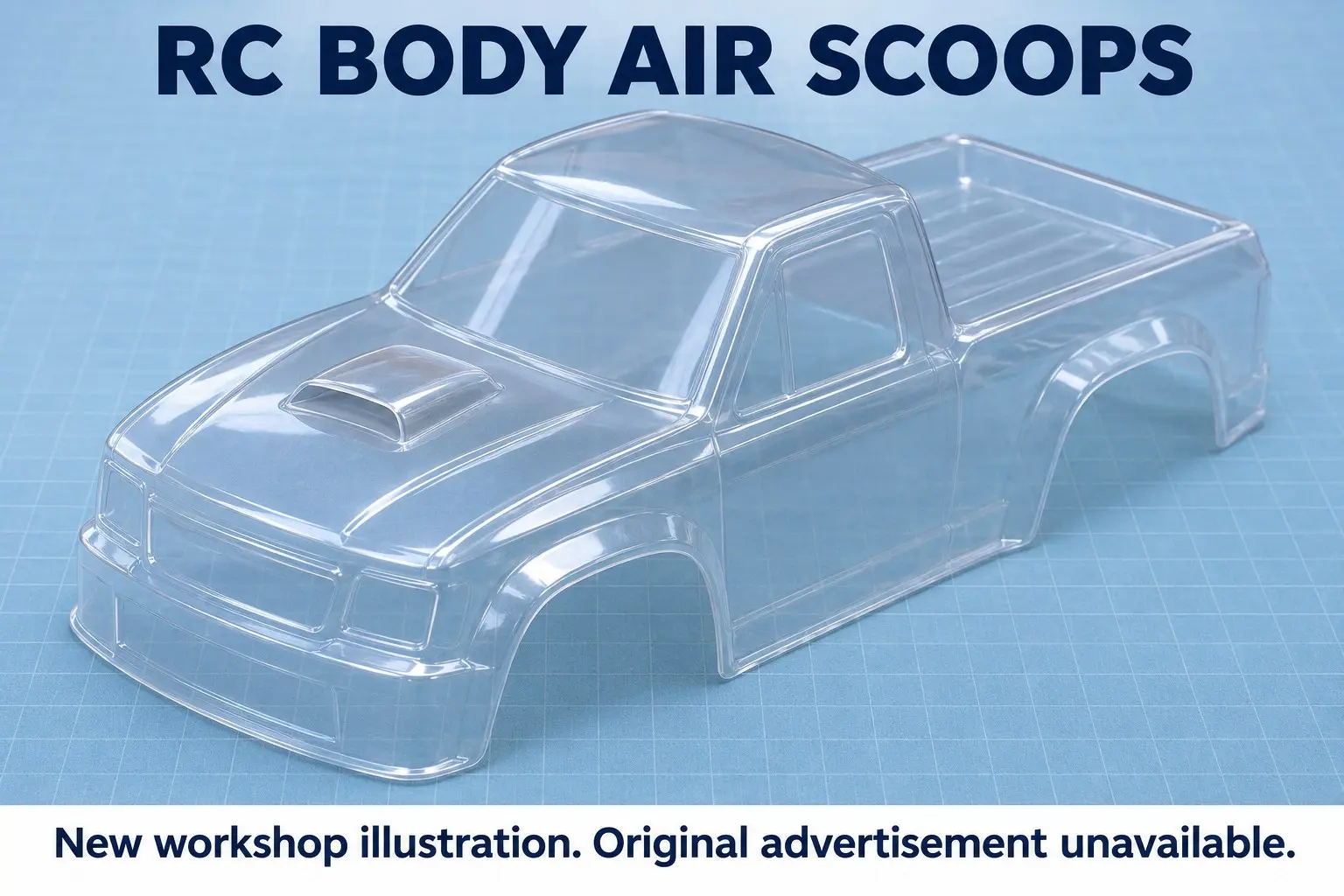
An older reference from the FT B4 discussion on R/C Tech linked to product entry 29833 and to an air-scoop advertising image. This page provides a reading destination for that earlier product link. The original specifications for entry 29833 have not been recovered, and we have not established that it was identical to entry 29840, the kit documented above.
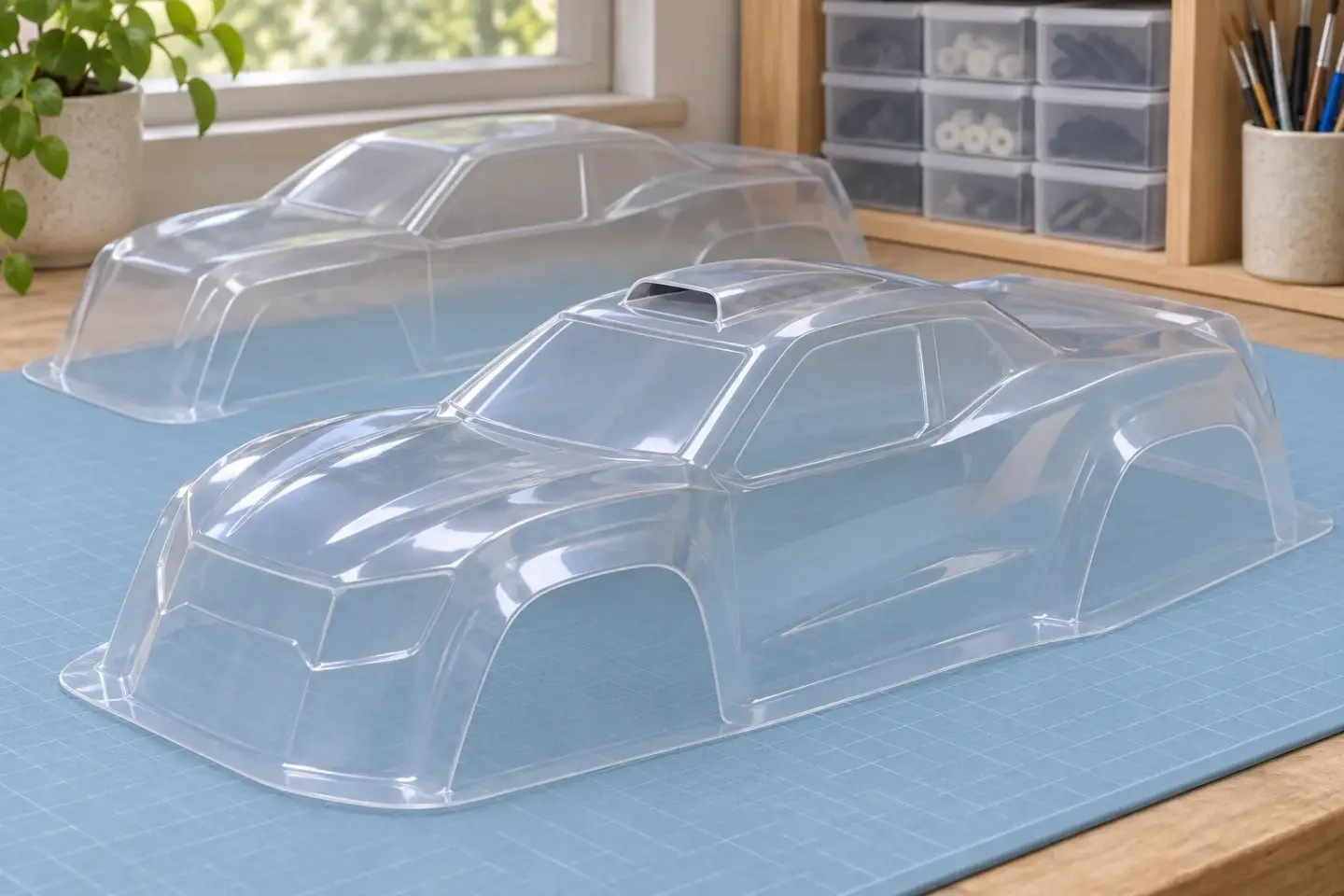
The illustration below is a new, generic depiction of a body air intake. It replaces the unavailable advertisement for readers following the old image link. It is not an original product photograph, an installation diagram or a verified representation of the historical kit.